Selected for AFI'26 by Kulturni centar Beograda (Cultural Centre of Belgrade), Serbia
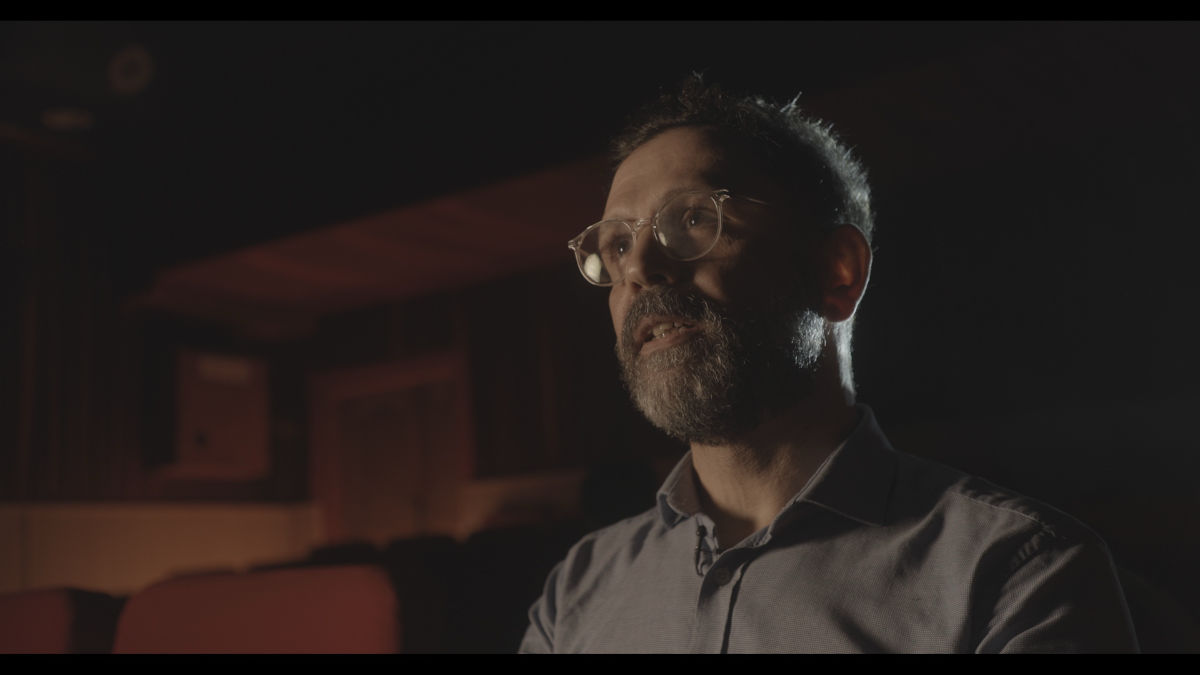
What compels you to work with moving image, and when did you first become interested in the medium?
I came to the moving image as a documentary filmmaker, but what has driven my practice from the beginning is an exploration of cinema as a vector of political thought. My first film, Cinema Komunisto, asked whether cinema could forge a country - I opened the vaults of Avala Film Studios and found decades of images that had been used to construct the political imaginary of Yugoslavia, a country that no longer existed. That encounter with an archive orphaned by the country's disappearance shaped everything since.
What the Non-Aligned Newsreels project added was the realization that Yugoslav cinema had also been directed outward - that cameramen had been sent to accompany liberation movements in Algeria and Mozambique, to help establish newsreel productions in Mali and Tanzania, to make cinema a form of solidarity across the decolonising world. This situated the archive as a kind of forgotten chapter within the tradition of Third Cinema and the militant image — the idea that the camera is not a neutral instrument but a vessel of political and struggle, that cinema can be a weapon in the service of emancipation, that the image is a vector of thought rather than a record of fact.
Hal Foster's concept of the "archival impulse" has been formative for how I understand this work. What draws me to these materials is not only what they contain but what they gesture toward — the beginnings they represent, the political projects they were made in service of that remain unfinished. The Non-Aligned Movement was a beginning that did not complete itself. The footage made in its name carries that incompleteness inside it. Working with the archive is, for me, a way of re-activating with the open-endedness of those beginnings — not to mourn them, but to ask what they still make possible.
This year's theme, A Kind of Power, brings together films which explore the ethics of looking, watching and witnessing. In a world where images circulate instantly and visibility can both empower and endanger, how do you navigate the responsibility of looking — and of asking others to look — in your work?
The Non-Aligned Newsreels project begins with a conviction that the footage held in the former Yugoslav Newsreels - shot by cameramen accompanying liberation movements in Algeria, Mozambique, Palestine - represents a militant cinema of solidarity. The footage was not made to be archived. It was made to be seen, to transmit a political vision, to build solidarity across borders.
What happened instead is that the images fell silent - literally, in many cases, as the reels do not contain sound - and then forgotten in a Belgrade vault after Yugoslavia collapsed. The power they were made to carry became suspended.
The silent screening workshops are an attempt to reactivate that power, through the form of what Agnieszka Sabiescu calls the "living archive." When I invite communities to watch archival footage of their own countries and lend their voices to the silent images, I am not presenting them with a finished history. I am creating a participatory space in which the archive is completed - or rather, continued - by the community it was always addressed to. The gathering itself, the act of convening in a cinema and thinking together, is where the political imagination of these images is restored and renewed, and becomes, following Sabiescu, the social transmission of memory that contributes to building social bonds.
What draws me to Algeria in particular is the recognition of something shared between Algerian and Yugoslav history: the ossification of official memory, the way the living energy of liberation was gradually drained from public life and frozen into state mythology. I first met many of the Algiers workshop participants in 2019, during the Hirak — the popular uprising in which Algerians reclaimed public voice after decades of suppressed speech. Working with these archival images alongside people who had lived through that moment felt like a continuation of the same impulse. It made viscerally clear what it means to return these images to a community living through an unfinished political project. The archive becomes alive again, and the cinema becomes what it was always capable of being - a space in which a community gathers to think collectively about the possibilities still open to them.
Please share a list of books, music, films, artworks, thinkers, spaces and places that inspire your practice, and in particular have fed into your thinking around this film.
Thinkers: Walter Benjamin, whose conception of history as a constellation of fragments to be seized in moments of danger underpins how I think about the archive. Paul Ricoeur, whose writing on the "orphaned" document — severed from its original address, mute and waiting — gave me the epigraph for this work. Hal Foster's essay on the archival impulse, with its account of artists drawn to the unfinished, the unrealised, the beginning that did not complete itself. Jacques Derrida's concept of hauntology and the persistent echoes of lost futures. Marshall McLuhan on "hot" and "cold" media, which shaped how I think about the relationship between image and sound in the Voices (Muted) installation. Agnieszka Sabiescu's work on living archives and participatory memory as a practice that produces rather than merely preserves.
Artists: Bouchra Khalili, Zineb Sedira, Nika Autor, and Rabih Mroué — all of whom work at the intersection of archives, testimony, and political memory in ways that have been genuinely formative for me.
Films and filmmakers: Gillo Pontecorvo's The Battle of Algiers — the foundational text of the militant image, and an inexhaustible reference for thinking about how cinema participates in the construction of liberation narraties. Sara Gómez's short documentary on women in the Cuban revolution (Mi aporte, 1969), which belongs to the same current of Third Cinema that these Yugoslav archival materials are in dialogue with. Dušan Makavejev's Innocence Unprotected (1968), which taught me that an archive can be reactivated through irreverence as much as reverence — that returning to old footage is always also an act of reinvention.
Spaces: The vault of Filmske Novosti in Belgrade, where I first encountered reels of footage no one had touched in decades. The Cinema Scala in Maputo, where the most recent workshop was held. The Institut Français in Algiers, where the Voices (Muted) installation was shown in 2025. The John F. Kennedy Presidential Library, where I found the English translations of the speeches from the first Non-Aligned Summit — documents that made it possible to begin the forensic work of synchronising image and sound across sixty years of separation.
What new projects or lines of research are currently preoccupying you?
The material presented here - the silent screening workshops held in Algiers in 2025 - is part of an ongoing and expanding body of work. Workshops are planned for 2026/2027 in Dar-es-Salaam and Addis Ababa, as well as with diasporic communities in France and Germany. Each workshop produces its own two-channel video installation, contributing to what Sabiescu’s "living archive" — one that grows with each gathering, building the link between these militant images, collective memory, and shared oral history.
What increasingly preoccupies me is the need for a young generation to return to beginnings and the unfinished in today’s geopolitical climate. The Non-Aligned Movement was one of the great political beginnings of the twentieth century — a genuine attempt to imagine a world organised on different principles, to construct a collective political imagination that refused the binaries of the Cold War. The footage made in the service of that project carries the energy of beginnings inside it. Hal Foster's archival impulse describes something of what drives me: the desire to work with materials that open onto unrealised possibilities, that point toward projects which were started but not completed, and to ask what it would mean to continue them.
The living archive, in this sense, is not a monument to the past. It is a form of ongoing work - a way of keeping those beginnings open, of insisting that the political imagination they carried has not yet exhausted itself. When communities gather in a cinema, watch these images, and speak back to them across six decades, something is transmitted that goes beyond memory. It is closer to what Third Cinema always aspired to: the cinema as the space in which a community thinks together.

© 2026 www.crawfordartgallery.ie